
AI for Kids in India – A Complete Beginner’s Guide for Parents & Students
Artificial Intelligence (AI for Kids)
Artificial Intelligence (AI) is no longer a futuristic concept. It is already shaping how children learn, communicate, explore information, and interact with technology.
From voice assistants to YouTube recommendations, AI is everywhere.
But the real question parents are asking today is:
How should children learn Artificial Intelligence safely and meaningfully?
This complete guide explains AI for kids in simple language and gives parents a structured roadmap for introducing AI to children aged 6–16.

What is AI for Kids?
AI for kids means helping children understand how smart computer systems learn, recognise patterns, make suggestions and support decisions. Children do not need to start with coding. They can begin with simple examples, sorting games, prediction activities, safe AI tools and guided discussions about how technology affects everyday life.

Future Career Readiness
Many careers in the next 10–20 years will involve AI:
-Robotics
-Data Science
-Healthcare AI
Smart
-Manufacturing
-Environmental
-Modelling
Early awareness builds confidence.

Critical Thinking Development
Learning AI helps children understand:
-How machines think
-How decisions are made
-How data influences outcomes
This improves logical reasoning.

Digital Awareness & Safety
If children understand AI, they:
-Question online content better
-Recognize algorithm influence
-Use technology responsibly
What is Artificial Intelligence?
Artificial Intelligence means teaching computers to think and make decisions like humans.
For example:
When YouTube suggests videos you may like
When Google Maps suggests the fastest route
When Alexa answers your questions
When a phone unlocks using face recognition
All these use AI.
In simple words:
AI helps machines learn from data and improve over time.
For children, AI can be understood as:
“Smart computer systems that learn and make decisions.”
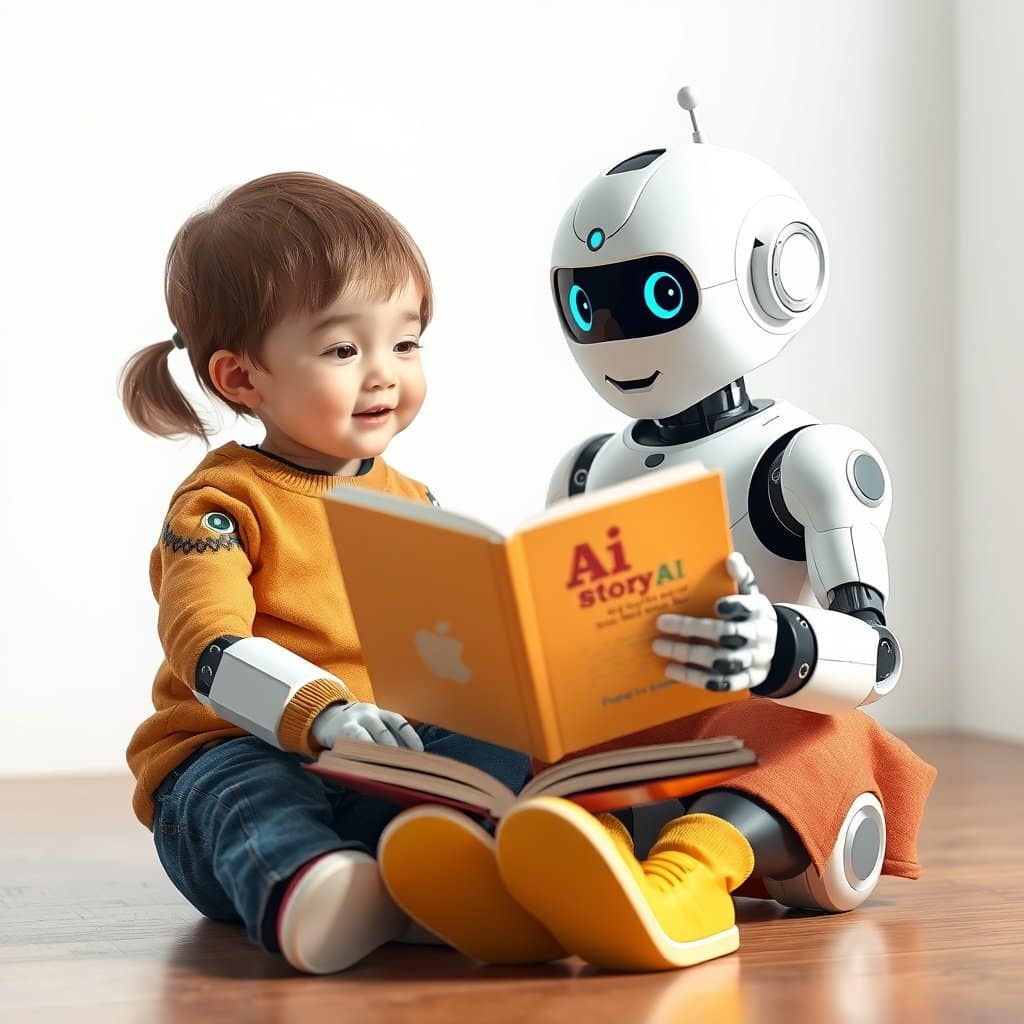
Is AI Safe for Children?
AI can be introduced safely when children use it with adult guidance, age-appropriate tools, privacy awareness and clear boundaries. The goal is not to make children dependent on AI, but to help them understand technology, question digital content and use smart tools responsibly.
Parents should guide children while using AI tools, especially during early exposure.
Children should avoid sharing personal details, passwords, photos or school information with AI tools.
Children should learn to question AI answers instead of accepting everything automatically.
Age-Wise AI Learning Roadmap for Kids
Children should learn AI gradually. Younger children can begin with curiosity, patterns and sorting, while older children can explore data, tools, ethics and beginner projects.
Ages 6–8
Focus: Curiosity and pattern recognition.
- Sorting objects
- Matching patterns
- Simple logic puzzles
- Observing smart devices
Goal: Curiosity, not complexity.
Ages 9–12
Focus: Basic AI concepts and data awareness.
- What is data?
- How recommendations work
- Simple machine learning examples
- Prediction games and quizzes
Goal: Concept clarity.
Ages 13–16
Focus: Responsible tools, projects and ethics.
- Beginner AI tools
- AI project ideas
- Ethical AI discussions
- Career awareness
Goal: Skill orientation.
Parents can introduce AI in simple ways:
• Sorting objects and explaining how “classification” works
• Showing how YouTube recommendations change
• Discussing how Google search results appear
• Playing prediction games
• Exploring safe AI drawing tools
AI education does not require expensive tools.
It requires structured guidance.
Children should understand:
-AI is trained on data
-Data can contain bias
-Machines can make mistakes
-Humans are responsible for technology
Teaching ethics early builds responsible digital citizens.
Here are simple beginner project ideas:
1. Create a rule-based chatbot on paper
2. Collect data about weather and observe patterns
3. Build a basic decision tree diagram
4. Compare human decisions vs machine decisions
5. Observe AI in real life and document examples
Projects help move from theory to application.
AI tools must be used responsibly.
Parents should:
• Monitor usage
• Discuss misinformation
• Explain algorithm bias
• Limit screen exposure
• Encourage supervised learning
AI literacy includes ethics and awareness.
Simple AI Glossary for Kids
Smart computer systems that can learn from information and make decisions.
Information that computers use to learn, compare and make suggestions.
A set of steps that helps a computer solve a problem or make a choice.
A way for computers to improve by learning from examples and patterns.
A question or instruction given to an AI tool to get a useful response.
Learning how to use AI fairly, safely and responsibly.
How CurioBuddy Introduces AI and STEM Thinking
CurioBuddy introduces children to AI, science, technology and critical thinking through simple explanations, activity-led learning, safe examples and curiosity-based exploration. Through The Qurious Atom, children can discover science, STEM, environment, technology and future-learning topics in a child-friendly way.
AI for Kids FAQs
Is AI too advanced for young children?
No. AI can be introduced through simple examples such as sorting, patterns, recommendations, voice assistants and prediction games. Younger children should focus on curiosity, not technical complexity.
Does my child need coding to learn AI?
No. Children can first understand AI concepts, data, patterns and responsible use. Coding can be introduced later based on the child’s age, interest and comfort level.
Is AI safe for kids?
AI can be safe for children when used with parent supervision, age-appropriate tools, privacy awareness and guided learning. Children should be taught not to share personal information with AI tools.
What is the right age to introduce AI?
Basic AI awareness can start around age 6 or 7 using simple examples, pattern games and supervised discussions. Older children can gradually explore AI tools, projects and ethics.
How can parents introduce AI without too much screen time?
Parents can use offline activities such as sorting games, prediction exercises, storytelling, worksheets and discussions about how smart devices make suggestions.